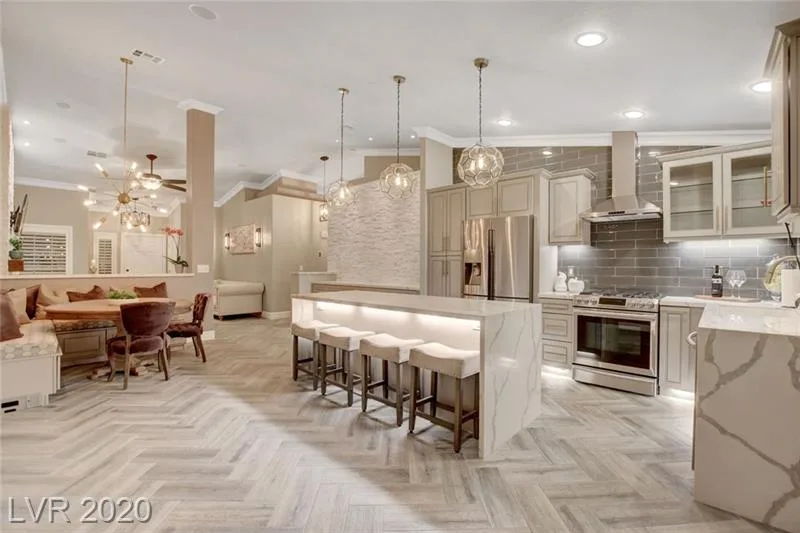
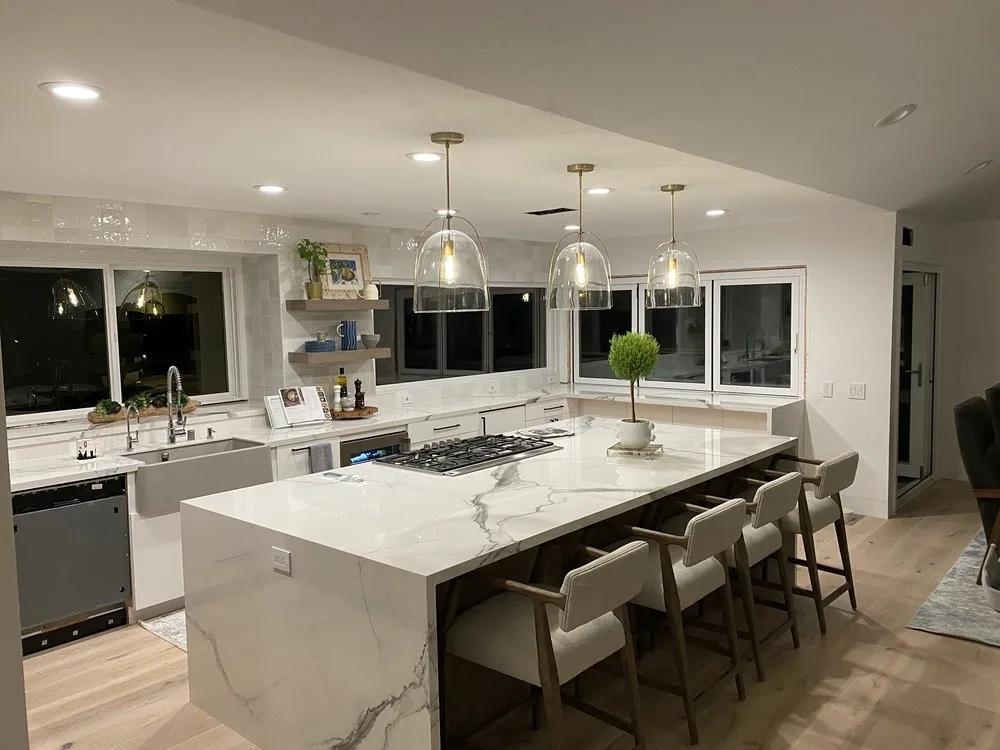
Choosing a kitchen and bath remodeler can feel like comparing catalogs, but the decision comes down to scope: what gets built, what gets installed, and who owns each handoff once demolition starts. For homeowners considering Home Touch Design Kitchen and Bath in Newark, NJ, the most useful approach is to verify how their design choices connect to installation—especially for custom cabinets, countertop selection, and tile/backplash work.
Home Touch Design lists its showroom at 465 Raymond Blvd, Newark, NJ 07105 and a public phone number of +1 973-306-0088. Their website also highlights design support and product categories (cabinets, countertops, tiles, mirrors) and references advanced 3D design technology. Use those signals as anchors for your questions: you want a process that turns material categories and 3D output into a controlled build sequence.
Map the decisions to install milestones, not just the design session
When timelines slip, it’s often because cabinet and countertop decisions weren’t locked early enough—or weren’t locked in the way the contractor builds from. Ask Home Touch Design to outline the decision-to-install sequence tied to real milestones, including when cabinet specifications must be finalized, when countertop templating is scheduled, and when tile layouts are confirmed for the areas being remodeled.
Confirm cabinet and countertop readiness for a fit that will hold up
Your kitchen’s fit is a chain reaction: cabinet measurements drive countertop fabrication, and countertop edges influence backsplash heights and how tile transitions work at seams. A practical way to test readiness is to ask what happens if a cabinet door style or countertop slab is changed after key specs are set. In particular, request clarity on whether they revise drawings promptly and how they document any schedule or scope impacts that result from the change.
Define cabinet, countertop, and tile handoffs in the written scope
Home Touch Design emphasizes cabinets and vanities alongside a selection of countertop and tile types. That helps you understand what materials are available, but remodeling goes smoothly only when handoffs are explicit. In your proposal, look for clear responsibility for measurements, order placement (and the change window for updates), countertop template scheduling, and which trade handles tile/backplash installation.
Ask how substitutions affect allowances and final finish
Substitutions can change more than appearance. If you switch to a different tile look or a different countertop finish, thickness or finish details can affect reveals around outlets, trims, or sink cutouts. Ask the team to explain how they document material allowances and what they use to calculate price differences when you make an adjustment—so the “what changes” conversation stays objective and trackable.
Use their 3D design work as a reference point for installation details
The company’s page references advanced 3D design technology. That’s valuable when it’s used to coordinate real-world layout constraints. During your discussion, connect the 3D output to installation expectations—door clearances, appliance spacing, vanity dimensions, and backsplash coverage boundaries—so the design becomes a shared reference rather than a one-time presentation.
Get specific on the details you expect to match
Before signing, create a short list of “must match” decisions tied to the 3D model. Examples include cabinet widths at the ends, where the backsplash stops at the counter, and how tile transitions are handled if walls are uneven. For a bath project, include vanity size and how tile substrate is treated around the shower area. The goal: the team can point to where those elements are locked in the design so installation can follow directly.
Plan for demolition-day unknowns and trade coordination
Even with strong upfront planning, demolition can reveal conditions that affect timelines. Ask Home Touch Design how they handle the “unknowns” moment: what documentation is used, whether design decisions are revisited once conditions are exposed, and how schedule impacts are communicated without leaving you to guess.
Also request clarity on coordination across trades—cabinet placement, countertop work, tile installation, and any plumbing/electrical updates—so you can see who leads each phase and what approvals are required before work continues.
What you should have in hand before authorizing work
A strong kitchen and bath remodel agreement should make scope readable. Confirm you receive the following items in your written documentation:
- Written product selections or allowances for cabinets/countertops/tile.
- A decision timeline tied to install milestones (including countertop templating timing and tile layout confirmation).
- Documented change rules for substitutions, including how they’re handled in cost and schedule.
- A clear statement of responsibilities for templates, measurements, and finish installation.
If you’re comparing contractors, treat Home Touch Design as a candidate based on whether their workflow matches your project reality. If they can clearly explain the decision-to-install sequence and connect cabinets, countertops, and tile planning to concrete handoffs, you’ll be better positioned to commit with confidence—whether you’re starting from a call to +1 973-306-0088 or from a visit to their 465 Raymond Blvd showroom.

 Plate · 66A